Elvoro Pest Control Solutions logoElvoro Pest Control Solutions
Rodent Exclusion and Abatement · Glendale, CA

Pest Control Service

Securing reliable pest control service in Glendale requires an integrated approach tailored to the unique architectural profiles and foothills topography of Los Angeles County. Hillside brush lines along the Verdugo Mountains and aging subfloor framing in historic districts create direct structural corridors for foraging wildlife, wood-destroying insects, and invasive urban colonies.
Talk to a real Glendale pro

No forms — call now for a fast, no-pressure quote.

📞 Call (747) 895-5068
Rodent Exclusion and AbatementSubterranean Termite Soil TreatmentDrywood Termite Precision Remediation
Pest Control Service in Glendale, CA
Rodent Exclusion and Abatementin Glendale, CA

How does professional pest control service operate in Glendale?

Pest Control Service in Glendale is a specialized property remediation discipline that identifies biological entry points, removes active infestations, and seals structural vulnerabilities across hillside and valley residences.

Why Glendale homeowners choose Elvoro Pest Control Solutions

  • Initial diagnostic visual assessments systematically inspect exterior perimeter foundations, attic insulation cavities, roofline transitions, eaves, and subfloor crawlspaces to locate active biological entryways and structural vulnerability points.
  • Mechanical exclusion protocols utilize 19-gauge hot-dipped galvanized steel mesh, copper wire packing, and heavy-duty elastomeric silicone sealants to permanently block pest re-entry through weep holes, vents, and construction gaps.
  • Spring swarming cycles between March and May require targeted subterranean termite soil barriers and monitoring arrays, while summer heat spikes demand non-repellent perimeter ant defense to disrupt supercolony trail networks.
  • Autumn and early winter temperature drops accelerate rodent migration out of the Verdugo Mountains and San Rafael Hills directly into residential attics, roof voids, and crawlspace framing.
Rodent Exclusion and Abatement
Subterranean Termite Soil Treatment
Drywood Termite Precision Remediation
Our Expertise

Crafted with Precision

Every service reflects the same meticulous attention to detail — whether it's a single job or a larger pest control service project across Glendale.
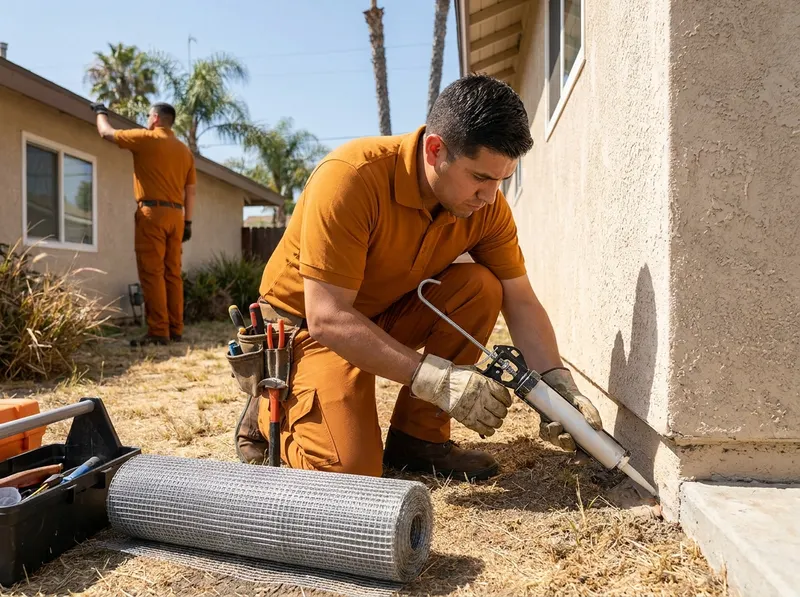
Rodent Exclusion and Abatement in Glendale, CA

Rodent Exclusion and Abatement

Comprehensive structural eradication of roof rats (Rattus rattus), Norway rats (Rattus norvegicus), and house mice (Mus musculus) through architectural sealing and mechanical abatement. Our field technicians inspect foundation perimeter stem walls, crawlspace ventilation screens, roof intersections, dormer transitions, eave returns, and utility penetrations. Every opening, gap, or construction void greater than one-quarter inch is permanently fortified using heavy-duty 19-gauge hot-dipped galvanized steel hardware cloth, metal flashing, and industrial-grade polyurethane elastomeric sealants. Inside the structure, technicians establish strategic mechanical trapping arrays within attic spaces, crawlspace zones, and subfloor voids to swiftly remove trapped rodents without utilizing anticoagulants or toxic chemical baits that cause secondary carcass decay inside structural wall cavities. Once mechanical monitoring confirms zero rodent activity, entry points are verified and structural integrity is certified.

View details →
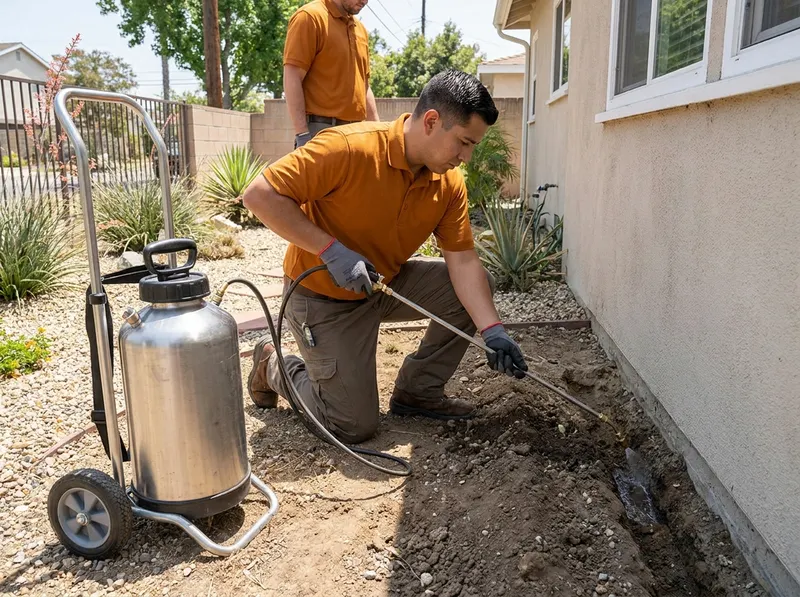
Subterranean Termite Soil Treatment in Glendale, CA

Subterranean Termite Soil Treatment

Advanced subterranean termite (Reticulitermes hesperus) interception and eradication using continuous non-repellent liquid termiticide soil barriers and low-profile in-ground colony elimination stations. Our application methodology establishes an unbroken protective chemical zone along exterior perimeter foundation footings, stem walls, and adjacent soil beds by trenching and precision sub-slab pressure injection near interior plumbing penetrations and structural expansion joints. Worker termites traversing the treated zone unknowingly pick up undetectable non-repellent molecules and transfer the active ingredient back to the central subterranean colony through social grooming and trophallaxis, triggering total colony collapse. Ongoing perimeter monitoring arrays provide long-term surveillance against foraging exploratory subterranean termites moving upward from subterranean moisture reserves.

View details →
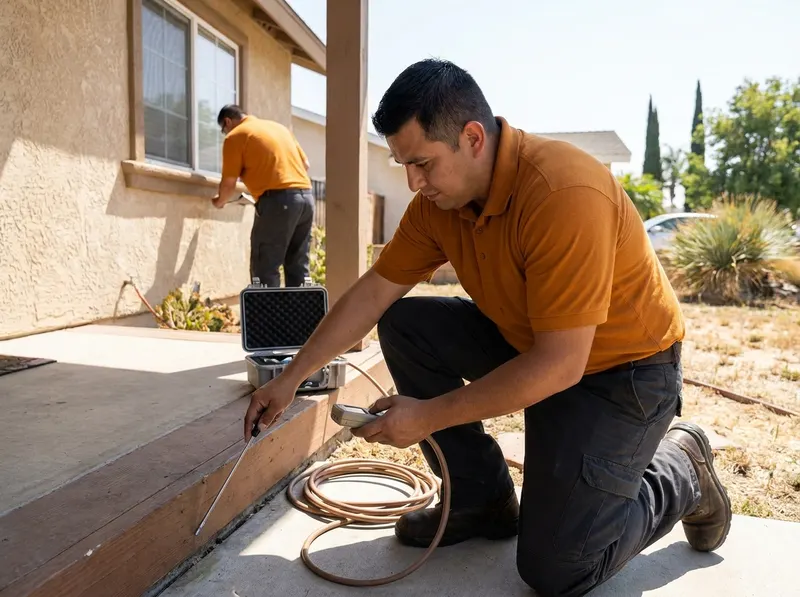
Drywood Termite Precision Remediation in Glendale, CA

Drywood Termite Precision Remediation

Targeted structural wood remediation engineered to eliminate drywood termite (Incisitermes minor) colonies nested within structural wall framing, exposed roof rafters, fascia boards, subfloors, and decorative architectural woodwork. Technicians utilize non-destructive acoustic and optical diagnostic tools to pinpoint active interior gallery networks behind finished drywall and timber surfaces. Precision mini-ports are drilled directly into infested timber galleries to inject high-residual localized non-repellent termiticidal foams and dusts, ensuring total gallery saturation and elimination of the reproductive caste. Exterior exposed roof eaves and rafter tails are treated with penetrating disodium octaborate tetrahydrate solutions to form an enduring protective barrier that prevents future airborne swarming alates from establishing new structural colonies, avoiding the disruptive evacuation, roof damage risk, and chemical displacement of whole-house tent fumigation.

View details →
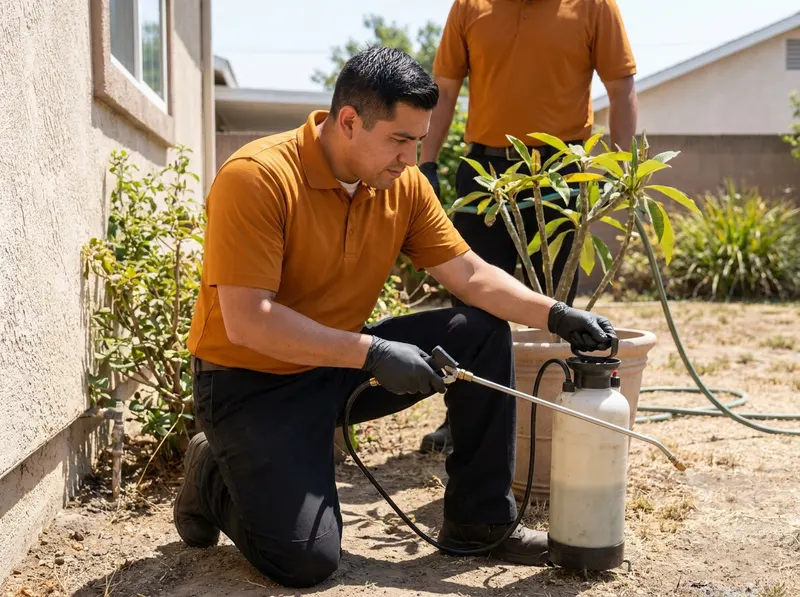
Argentine Ant Perimeter Defense in Glendale, CA

Argentine Ant Perimeter Defense

Specialized multi-queen supercolony remediation targeting Argentine ants (Linepithema humile) and nuisance perimeter species. Rather than utilizing repellent contact sprays that trigger colony budding and disperse secondary satellite nests throughout interior wall voids, our protocol deploys slow-acting non-repellent liquid barriers and balanced protein-sugar micro-bait arrays. Exterior perimeter foundational stem walls, hardscape expansion joints, irrigation valve boxes, and utility service lines are treated with non-detectable chemistries. Foraging worker ants carry the active compound back to subterranean nesting chambers, transferring the control agent directly to multiple reproductive queens and juvenile larvae to achieve complete structural suppression and trail elimination during high-temperature summer weather cycles.

View details →

German Cockroach Clean-Out in Glendale, CA

German Cockroach Clean-Out

Intensive sanitary remediation designed to eliminate severe German cockroach (Blattella germanica) infestations in residential kitchens, pantries, utility closets, and commercial food preparation areas. Technicians execute deep-harborage inspections targeting motor housings, refrigeration compressor coils, cabinet hinges, under-sink plumbing chases, and electrical junction boxes. Treatment protocols integrate targeted insect growth regulators (IGRs) that break reproductive maturation cycles, high-potency attractant matrix gel baits placed in minute structural micro-crevices, and specialized void dusts injected behind baseboards and wall voids. This systematic, low-volatility remediation strategy rapidly drops juvenile and adult insect populations without airborne aerosol drift or pesticide residue contamination across food-contact surfaces.

View details →
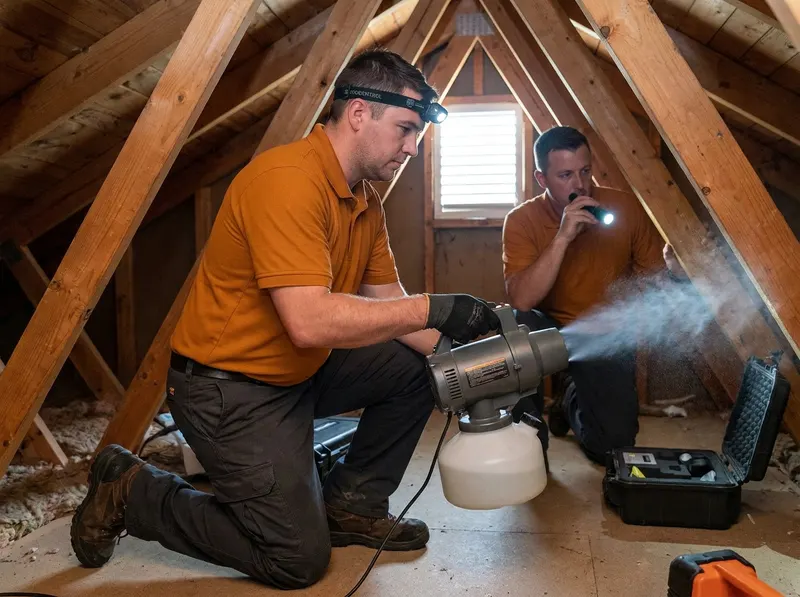
Attic and Crawlspace Decontamination in Glendale, CA

Attic and Crawlspace Decontamination

Complete biological cleanup, hazardous material extraction, and thermal restoration for attic cavities and subfloor crawlspaces contaminated by rodents, bats, or urban wildlife. Technicians operate under negative air containment using commercial HEPA-filtered vacuum extraction systems to safely remove soiled cellulose or fiberglass batt insulation, rodent droppings, urine-saturated nesting materials, and biohazard particulates. Structural ceiling joists, subfloor timber assemblies, and vertical studs are thoroughly sanitized and deodorized using hospital-grade broad-spectrum antimicrobial and enzymatic misting agents to eliminate hazardous zoonotic pathogens, bacterial spores, and pheromone attractant trails. Technicians then air-seal all ceiling electrical penetrations before blowing in fresh, pest-resistant borate-treated thermal insulation to restore energy efficiency and sanitary indoor air quality.

View details →
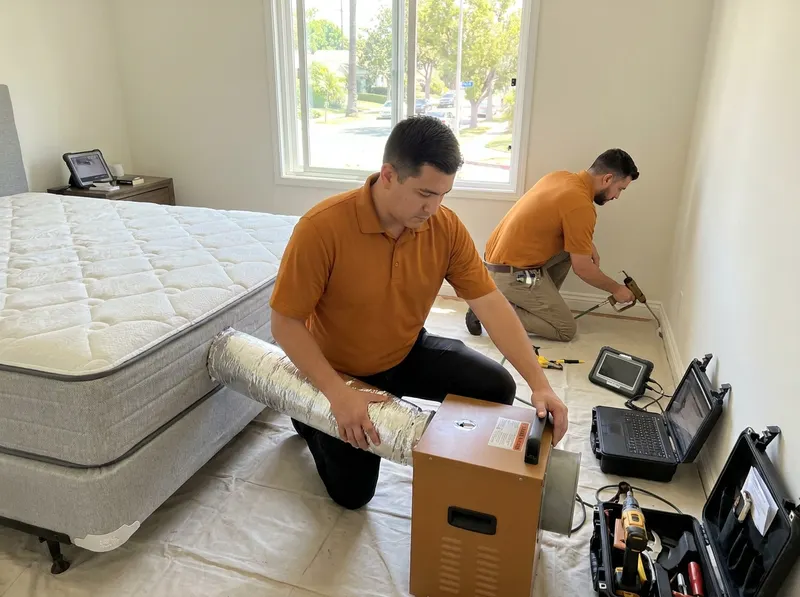
Bed Bug Thermal and Precision Remediation in Glendale, CA

Bed Bug Thermal and Precision Remediation

Targeted eradication protocols engineered to neutralize all developmental stages of bed bugs (Cimex lectularius), including micro-eggs, nymphs, and adult populations. Inspections focus on mattress seam lines, box spring internal frameworks, bed frame joinery, baseboard interfaces, electrical switch boxes, and upholstered furniture crevices. Remediation utilizes high-temperature dry steam application to immediately eliminate surface populations and viable egg clusters, followed by the precision placement of long-residual botanical micro-dusts and non-repellent structural void insecticides within perimeter baseboards and wall cavities. This dual-action approach prevents re-emergence without requiring extensive property disposal or excessive chemical exposure in sleeping quarters.

View details →
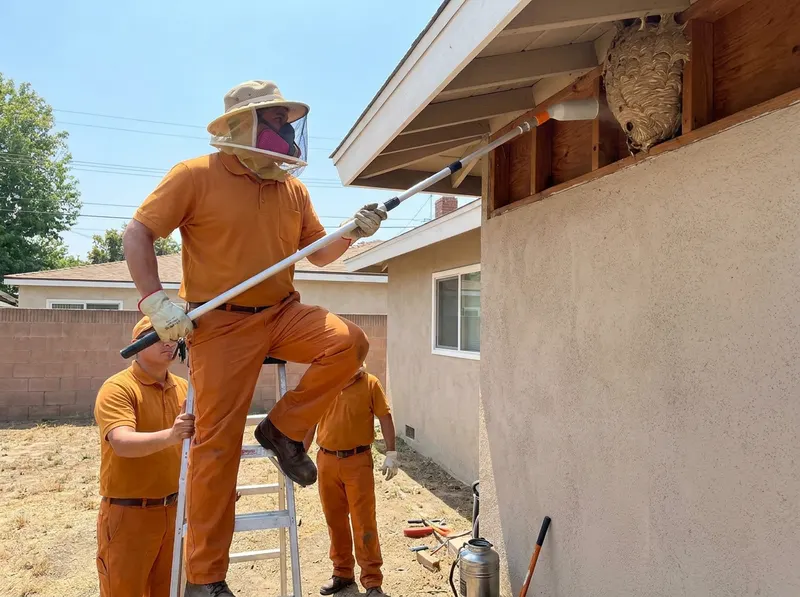
Stinging Insect Nest Removal in Glendale, CA

Stinging Insect Nest Removal

Rapid structural removal and defensive void remediation for aerial yellow jackets, paper wasps (Polistes), mud daubers, and structural honey bee colonies nesting in roof eaves, chimney caps, attic vents, and exterior wall voids. Technicians utilize specialized high-reach application lances and protective gear to neutralize aggressive defensive colonies at the nesting source. After physical nest removal and extraction of honeycomb or larval comb structures, the void or architectural recess is cleaned and treated with long-lasting residual repellent dusts to neutralize lingering territorial pheromones and physically prevent returning scout wasps from rebuilding nests in the same architectural eave pockets.

View details →

Pest Control Service in Glendale is a specialized property remediation discipline that identifies biological entry points, removes active infestations, and seals structural vulnerabilities across hillside and valley residences.

  • Initial diagnostic visual assessments systematically inspect exterior perimeter foundations, attic insulation cavities, roofline transitions, eaves, and subfloor crawlspaces to locate active biological entryways and structural vulnerability points.
  • Mechanical exclusion protocols utilize 19-gauge hot-dipped galvanized steel mesh, copper wire packing, and heavy-duty elastomeric silicone sealants to permanently block pest re-entry through weep holes, vents, and construction gaps.
  • Spring swarming cycles between March and May require targeted subterranean termite soil barriers and monitoring arrays, while summer heat spikes demand non-repellent perimeter ant defense to disrupt supercolony trail networks.
  • Autumn and early winter temperature drops accelerate rodent migration out of the Verdugo Mountains and San Rafael Hills directly into residential attics, roof voids, and crawlspace framing.
  • Comprehensive property remediation relies on physical harborage reduction, localized precision treatments, and insect growth regulators rather than recurring, broad-scale interior pesticide applications.
The Elvoro Pest Control Solutions standard

Why Glendale keeps calling us back

01

A clear, written price

You get a firm, itemized quote for your pest control service before any work begins — no surprises, no pressure.

02

Your property, protected

Careful prep, tidy work, and a full cleanup when we are done. We treat your home and belongings like our own.

03

One crew, start to finish

The same trusted, background-checked team from the first call to the final check.

Buyer's guide

How to choose the right pro

Selecting the correct structural remediation protocol depends entirely on the biological vector, the specific architectural vulnerability of the property, and the severity of the infestation. If active scratching, gnawing sounds, or droppings are discovered within attic insulation, suspended ceilings, or subfloor crawlspaces, choose comprehensive structural rodent exclusion and directional trapping over chemical rodenticides. Exterior mechanical sealing with 19-gauge galvanized hardware cloth and elastomeric sealants permanently resolves rodent entry without risking secondary poisoned-carcass odor issues within enclosed wall cavities. If wooden structural components, exposed rafter tails, window sills, or door jambs exhibit localized hexagonal frass, kick-out holes, or discarded wings, choose targeted drywood termite localized injection or borate surface treatment. Localized wood injection delivers direct insecticidal penetration into active termite galleries, whereas whole-structure fumigation tenting displaces occupants for multiple days and offers zero residual protection against future airborne swarms once the gas clears. If continuous foraging trails of Argentine ants or odorous house ants are observed penetrating baseboards, plumbing penetrations, or electrical faceplates during high-temperature dry spells, select precision non-repellent perimeter barrier defense combined with micro-dose liquid ant baiting. Non-repellent chemistries allow foraging worker ants to transfer the active toxicant throughout the subterranean queen network, whereas off-the-shelf repellent aerosol sprays scatter multi-queen colonies through a process called budding, which multiplies satellite infestations inside interior wall voids. The trade-off between physical structural exclusion and recurring perimeter applications centers on permanence versus ongoing maintenance: permanent mechanical exclusion requires a higher upfront labor investment to seal intricate structural junctions across multi-story rooflines and foundations, whereas chemical perimeter maintenance requires scheduled re-applications to counter chemical degradation caused by Southern California solar radiation and oxidative weathering.

Investment

What it costs

Every project gets a firm, written price after a free on-site visit. Ranges below for orientation.

Comprehensive Initial Inspection & Diagnostic Assessment$250 – $350
Targeted Single-Vector Pest Eradication Service$250 – $475
Standard Residential Rodent Trapping & Abatement Program$350 – $650
Full-Structure Rodent Mechanical Exclusion & Sealing$450 – $1,400
Localized Drywood Termite Gallery Precision Injection$375 – $850
Perimeter Subterranean Termite Non-Repellent Liquid Barrier$850 – $2,400
Exterior Argentine Ant & Nuisance Perimeter Barrier Defense$275 – $550
Complete German Cockroach Clean-Out Protocol (Multi-Visit)$450 – $950
Bed Bug Multi-Room Precision Remediation$750 – $2,200
Attic Decontamination, HEPA Extraction & Thermal Restoration$1,200 – $3,800
Free, no-pressure estimate

Ready to get it done right?

Tell us about your pest control service job and we'll send a clear, written quote — usually the same day. Or just call and talk to a real Glendale pro.

(747) 895-5068

Where we work

Areas we cover

Elvoro Pest Control Solutions pest control service team in Glendale, CA

Properties located across the foothill transitions of the Verdugo Mountains and the rugged terrain of the San Rafael Hills occupy a unique ecological interface where dense chaparral brush, coastal sage scrub, and oak woodlands directly abut residential structures. In historic hillside neighborhoods such as Rossmoyne, Brockmont, and Chevy Chase, classic Spanish Colonial Revival, Tudor, and California Craftsman architecture prominently features open eave tails, unsealed clay barrel tile roof underlayments, decorative attic louvers, and raised foundation subfloor crawlspaces. These heritage structural elements provide direct, unhindered access corridors for roof rats (Rattus rattus) seeking insulated nesting grounds, especially when overhanging native oak and eucalyptus branches form natural aerial bridges. Concurrently, the regional decomposed granite soils characteristic of Northern Glendale and the San Fernando Valley create optimal tunneling conditions for western subterranean termites, which establish vast underground foraging networks that exploit microscopic fissures in aging concrete stem walls and sub-slab plumbing penetrations. During severe summer heat waves and dry Santa Ana wind events, natural moisture reserves in canyons near Deukmejian Wilderness Park and Brand Park evaporate rapidly, driving expansive Argentine ant supercolonies and peripheral desert pests straight into residential foundation lines and domestic irrigation systems. Managing these biological pressures requires a technical, geography-specific approach that targets structural vulnerabilities, balances natural foothill habitat interfaces, and delivers enduring physical exclusion without contaminating local watersheds.

RossmoyneVerdugo WoodlandsAdams HillSparr HeightsChevy ChaseBrockmontRiverside RanchoGreenbriarOakmont
Questions

Common questions

Why do hillside properties in Glendale experience frequent rodent incursions?
Hillside homes bordering wilderness interfaces like Deukmejian Wilderness Park, Brand Park, and Chevy Chase Canyon sit directly adjacent to extensive natural chaparral corridors. As natural canyon vegetation dries out during the late summer and evening temperatures drop sharply in late autumn, wild roof rat populations migrate into residential zones. Roof rats leverage mature tree canopies, telephone drops, and fence lines to access multi-level rooflines, entering residential attics through unsealed barrel tile roof voids, open rafter tails, dormer vents, and exterior chimney flashing.
How do historic home styles across Glendale influence termite treatments?
Historic architectural properties in neighborhoods such as Rossmoyne, Brockmont, and Verdugo Woodlands frequently utilize raised wood subfloors, unpainted Douglas fir structural framing, and exposed exterior timber eaves. These features make structures highly susceptible to both subterranean termites emerging from foundation soil and drywood termites entering via airborne swarms. Rather than relying solely on whole-home chemical tent fumigation—which risks cracking fragile historic clay roof tiles and leaves no residual defense against future swarms—remediation prioritizes localized high-pressure timber injections, borate timber impregnations, and continuous perimeter foundation termiticide barriers.
What is the difference between physical mechanical exclusion and ongoing chemical sprays in Glendale?
Physical mechanical exclusion permanently seals architectural openings using heavy-duty materials such as 19-gauge galvanized wire mesh, copper mesh, sheet metal flashing, and elastomeric silicone compounds to prevent pests from physically entering the building envelope. Routine exterior chemical spraying merely leaves a temporary liquid residue along perimeter foundations that breaks down quickly under intense Southern California UV radiation, irrigation wash-off, and oxidation, requiring ongoing re-treatments to maintain biological deterrence.
Are pest control products safe for households near Glendale parks and municipal waterways?
Professional pest management protocols deployed near municipal recreation zones like Verdugo Park or protected canyon watersheds emphasize low-impact, targeted applications. Technicians utilize enclosed tamper-resistant bait stations, targeted micro-gel placements inside structural voids, and non-volatile liquid barriers applied strictly to exterior foundation cracks. These precision methods eliminate structural infestations while completely avoiding chemical drift, domestic pet exposure, or runoff into the Los Angeles County storm drain infrastructure.
When is the peak season for subterranean termite swarming in Glendale?
Subterranean termite reproductive swarms (alates) primarily emerge between March and May following seasonal spring rainstorms when ambient soil temperatures rise above 70 degrees Fahrenheit. The sudden increase in soil warmth and subterranean moisture triggers winged reproductives to fly from underground colonies to mate and establish new colonies in adjacent foundation soil. In contrast, drywood termites swarm during the late summer and early autumn heat spikes, typically from August through October.
Why are Argentine ant infestations so persistent in Glendale homes during summer heat waves?
Argentine ants form massive interconnected supercolonies with hundreds of interconnected subterranean nests containing multiple reproductive queens. During intense summer heat spikes and sustained dry periods, outdoor soil moisture completely depletes, forcing worker ants to seek water and sugary food sources inside residential kitchens, bathrooms, and laundry rooms. Spraying standard over-the-counter repellent insecticides triggers a biological stress response called colony budding, causing the queens to split and multiply throughout interior wall voids; effective remediation requires slow-acting non-repellent transfer baits that worker ants carry back to eliminate the central queens.
How can homeowners in Glendale prevent roof rats from accessing Spanish tile roofs?
Preventing roof rat access on Spanish clay tile roofs requires comprehensive architectural proofing. Technicians install custom-fitted galvanized metal eave closures (bird stops) and pack structural openings beneath curved perimeter barrel tiles using galvanized hardware cloth and elastomeric bonding sealants. Additionally, homeowners must maintain a strict six-foot clearance between exterior tree branches, utility lines, and the roofline to eliminate aerial jumping pathways utilized by climbing rodents.
What steps are involved in attic decontamination after a severe rodent infestation in Glendale?
Attic decontamination begins by sealing all structural entry points to stop rodent ingress. Technicians then establish negative air HEPA filtration systems to safely extract urine-saturated insulation, biohazardous droppings, and nesting debris without contaminating the home's indoor air envelope. The bare structural framing joists are thoroughly treated with an enzymatic, hospital-grade antimicrobial mist to neutralize dangerous pathogens, zoonotic bacteria, and lingering pheromone trails before new, pest-resistant borate-treated thermal insulation is professionally blown in.
How does pest control pricing work for multi-family residential buildings in Glendale?
Multi-family residential pest control pricing is determined by the total number of residential units, the structural layout (e.g., central hallway versus open garden-style courtyard), the history of pest pressure, and the specific vectors involved (such as German cockroaches, bed bugs, or structural rodents). Commercial service begins with an extensive property diagnostic inspection, after which an itemized, transparent remediation plan is established based on unit-by-unit treatment, common-area exclusion, and preventative perimeter maintenance without locked multi-year contracts.
What makes German cockroach elimination challenging in Glendale multi-family properties?
German cockroaches possess an exceptionally rapid 28-day reproductive cycle and aggregate in tight, warm micro-crevices near electrical motors, dishwashers, and wall plumbing chases. They easily travel between adjacent apartment units through shared utility chases and electrical conduits. Eliminating them requires a coordinated multi-unit approach utilizing targeted insect growth regulators (IGRs) to arrest nymph molting, precision non-repellent bait matrices placed directly in structural voids, and thorough sanitation improvements rather than generic surface aerosol spraying.
Can pest control technicians treat drywood termites without tent fumigation in Glendale?
Yes, localized drywood termite infestations can be effectively eliminated without structural tent fumigation through precision localized injection and surface borate treatments. When termite activity is confined to accessible structural framing, window jambs, roof rafters, or fascia boards, technicians drill directly into active timber gallery chambers to inject pressurized non-repellent termiticidal foam and long-residual dusts. This localized approach eliminates the active colony directly at the source, preserves fragile clay tile roofs from foot-traffic breakage, and eliminates the need for multi-day family and pet evacuation.
What should Glendale homeowners look for during a seasonal exterior pest inspection?
Homeowners should visually inspect perimeter foundation stem walls for earthen subterranean termite mud tubes, examine wooden fascia boards and eave tails for small round kick-out holes with piles of drywood termite frass, check crawlspace foundation screens for tears or gaps larger than one-quarter inch, verify that landscape irrigation heads do not spray directly against structural stucco, and ensure tree canopies and climbing ivy are trimmed back at least three to four feet from exterior exterior walls and rooflines.

Ready to get started?

Free estimates for Glendale & the surrounding area.

Glendale Pest Control Service guides

How much does pest control service cost in Glendale CA? — Pricing Guide →How Often Should Residential Pest Control Be Scheduled in Glendale? — Complete Guide →Are same-day emergency pest control appointments available in Glendale CA? — Complete Guide →Argentine Ant Control in Glendale Homes →